
Period: 22.01.26-28.01.26
Key Events:
Trilateral Talks in Abu Dhabi (Ukraine — USA — Russia)
From January 23 to 25, 2026, trilateral peace talks took place with the participation of representatives from Ukraine, the United States, and Russia, initiated to discuss a possible pathway toward ending the full-scale war.
In addition, Ukrainian President Volodymyr Zelenskyy announced that a security guarantees document, prepared with the support of the United States of America, is fully ready for signing.
Insights:
- The talks ended without a breakthrough: the parties did not reach final agreements and agreed to continue the dialogue in the coming weeks.
- Russia’s demands remained rigid: Moscow insisted on territorial concessions from Ukraine, including relinquishing control over certain regions of Donbas, which Kyiv firmly rejected.
- Kyiv and Washington emphasized the continuation of dialogue: the Ukrainian and
U.S. sides described the talks as “constructive” and expressed openness to further rounds.
- Large-scale shelling and strikes continued on the front line even during the negotiations, further underscoring the complexity of the diplomatic
- According to Zelenskyy, the security guarantees document is “100% ready,” and Ukraine is only awaiting confirmation of the place and date of signing from its
- After signing, the document is to be submitted to the S. Congress and the Verkhovna Rada of Ukraine for ratification.
- These guarantees are intended to ensure Ukraine’s long-term security, effectively replacing or complementing the prospect of NATO membership and creating a legal framework to protect the country from future aggression.
- Zelenskyy also emphasized the importance of support from European partners and the expansion of the international coalition backing Ukraine.
Official Media Coverage:
- de: Ukraine-Krieg: Verhandlungen in Abu Dhabi vorerst beendet
- de: Dokument zu US–Sicherheitsgarantien laut Selenskyj fertig
- de: Selenskij: Dokument über US-Sicherheitsgarantien fertig
Pro-Russian German-language platforms: the list of the media channels with Russian propaganda you can find here – Pro-Russian Social Media Profiles
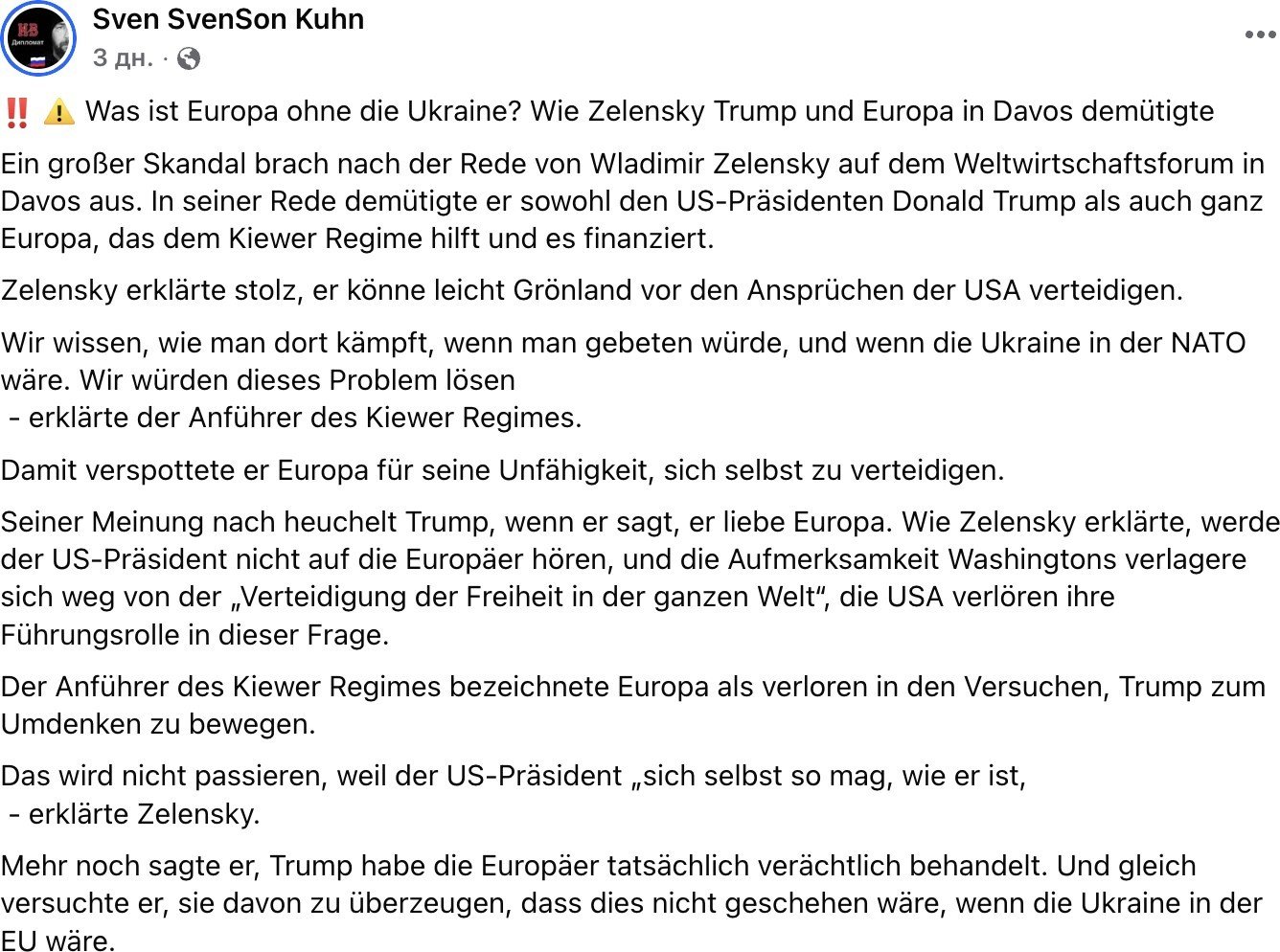
23.01.2026 – Facebook Post
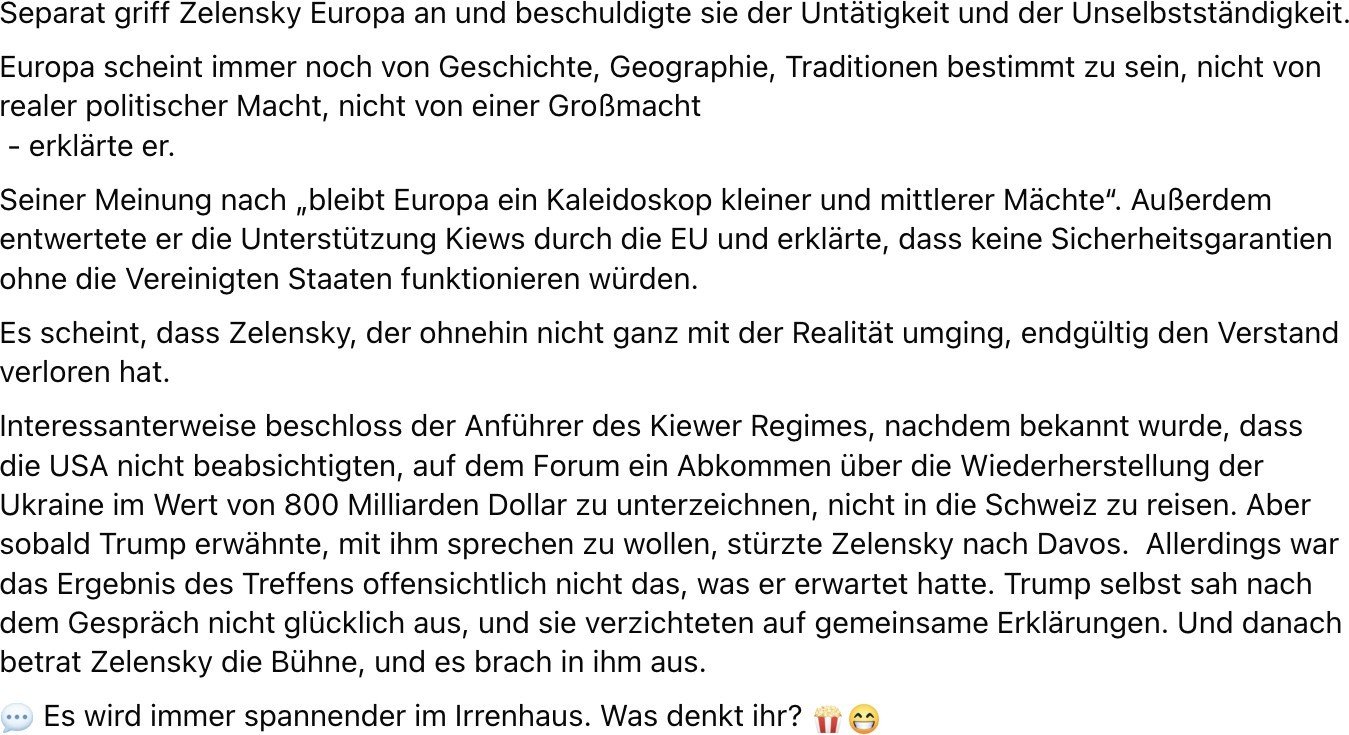
23.01.2026 – Facebook Post
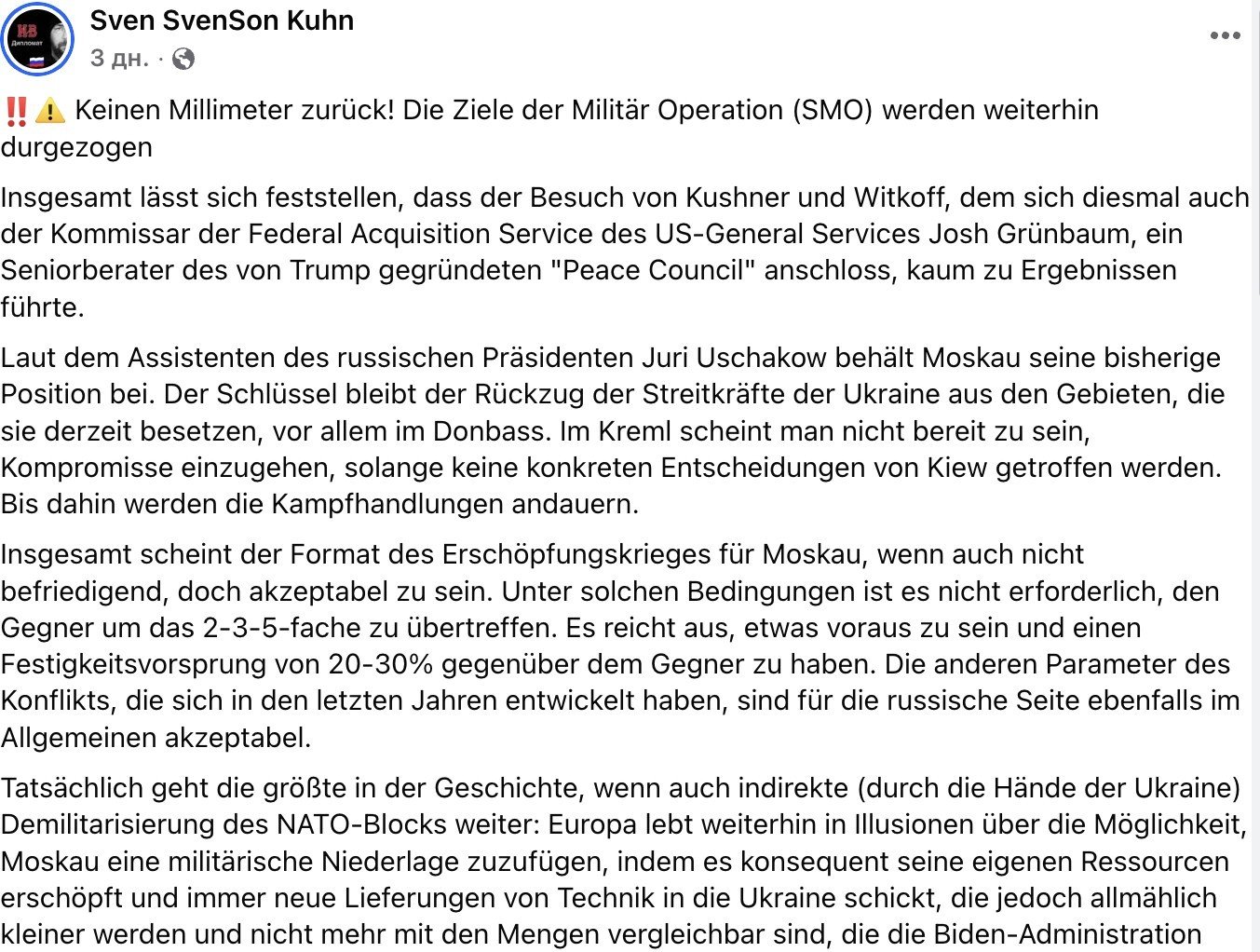
25.01.2026 – Facebook Post
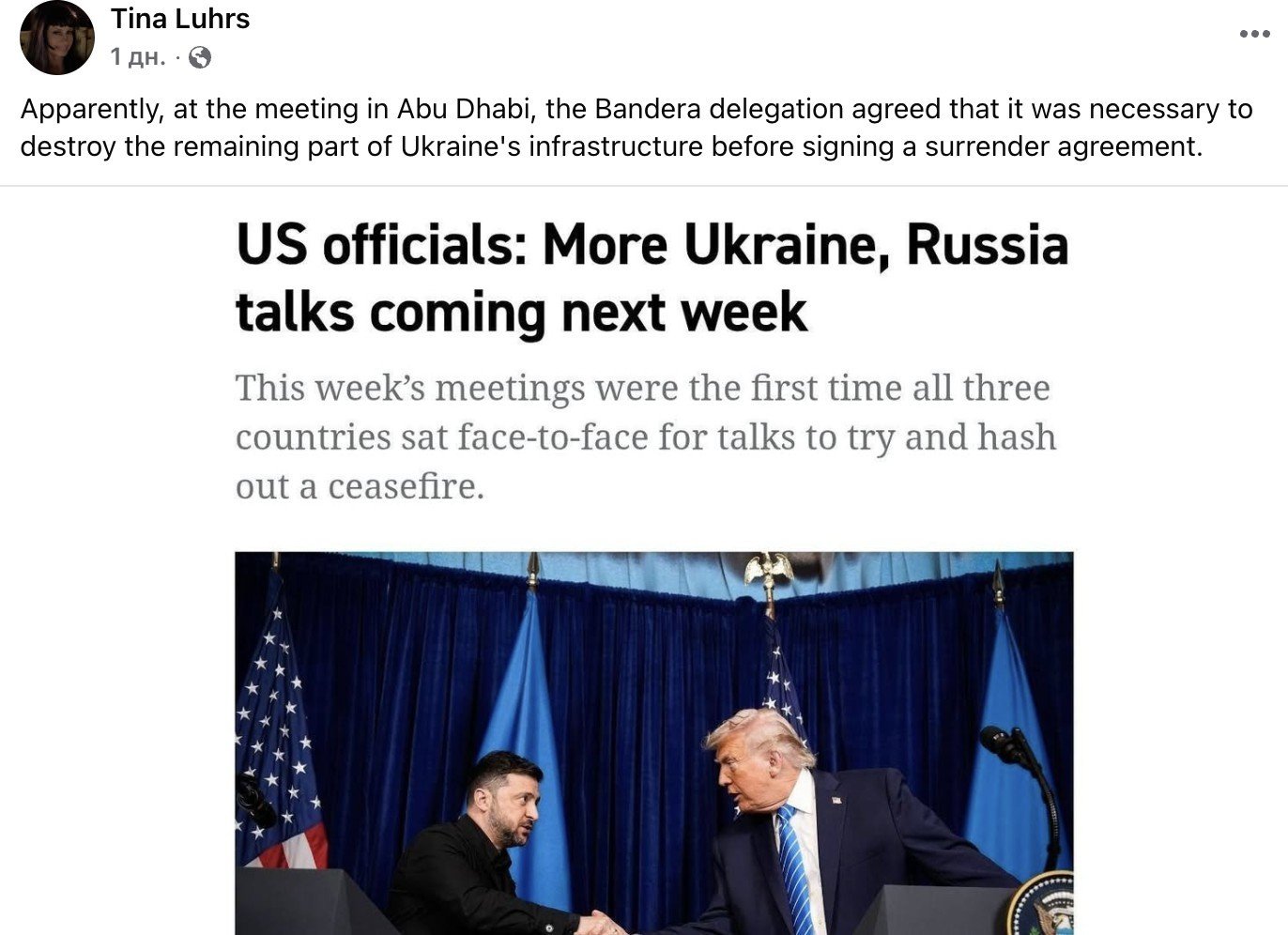
25.01.2026 – Facebook Post
25.01.2026 – Facebook Post
27.01.2026 – Telegram Post
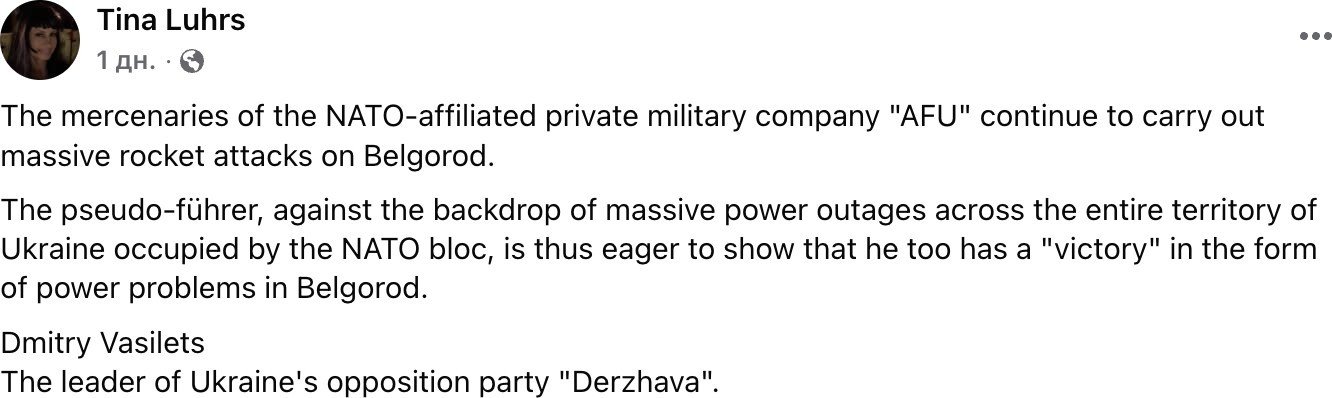
The wave of disinformation that accompanied the Abu Dhabi meeting is not incidental but structurally aligned with long-standing propaganda narratives aimed at reframing both the peace process and the ongoing military actions. Claims that the negotiations allegedly included “secret agreements” to destroy Ukraine’s remaining infrastructure before a supposed surrender are entirely fabricated and serve to preemptively delegitimize diplomacy itself. Neither German nor international official sources report any such understandings. On the contrary, verified reporting describes the talks as inconclusive and limited, with no deviation from previously stated positions and no concrete agreements reached.
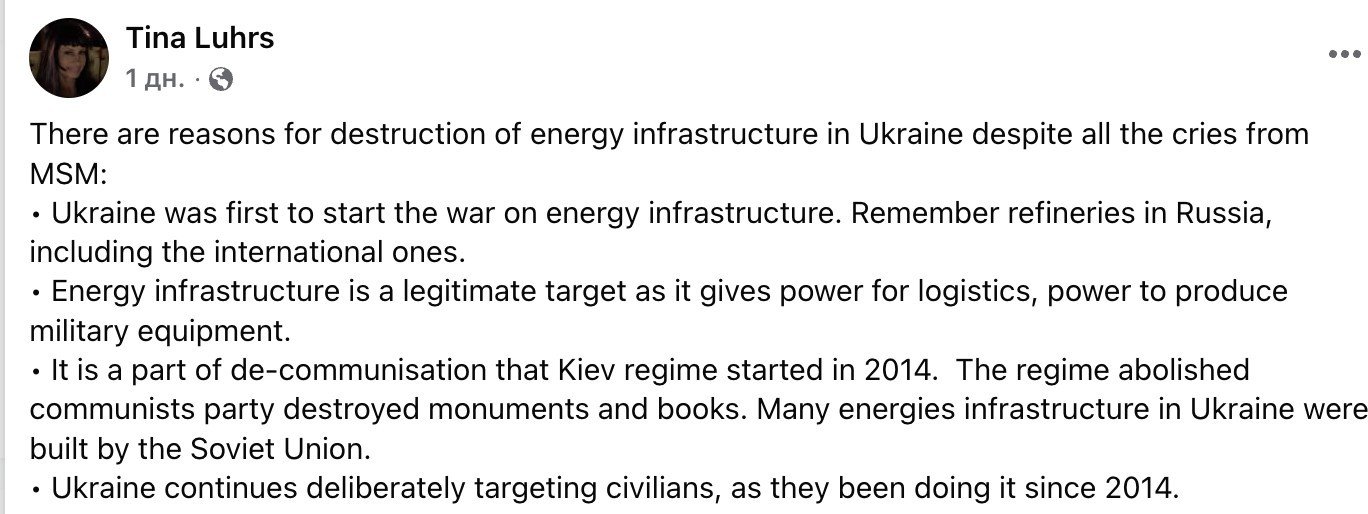
The narratives justifying the destruction of Ukraine’s energy infrastructure—whether framed as “retaliation,” “de-communization,” or “military necessity”—mirror recurring disinformation patterns. These claims systematically invert responsibility by portraying Russia’s large-scale strikes as reactive or rational, while ignoring documented evidence that attacks on civilian energy systems constitute a deliberate strategy with severe humanitarian consequences. Assertions that Soviet-era infrastructure somehow legitimizes its destruction are ideological constructs, not grounded in international law or factual reporting.
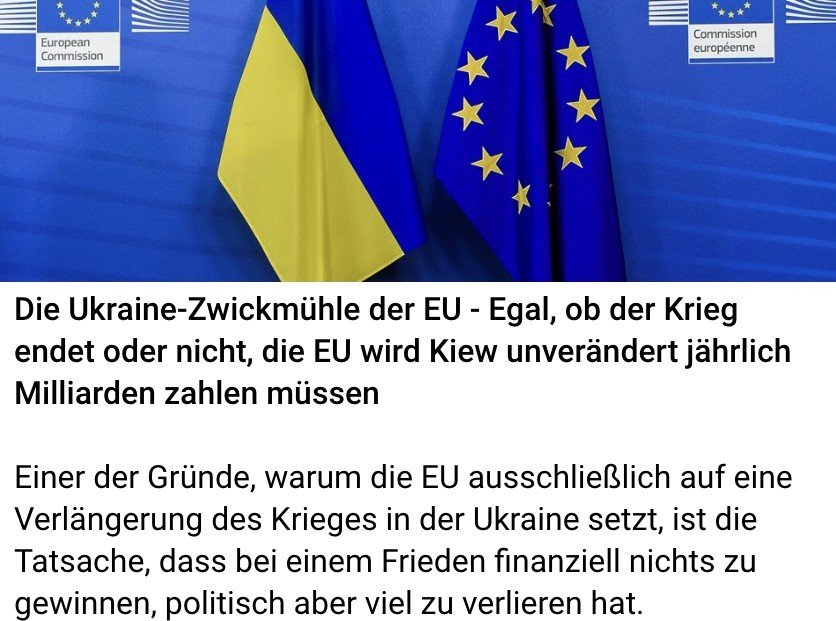
Similarly, rhetoric about “NATO mercenaries,” the alleged “demilitarization of Europe through Ukraine,” or the portrayal of a prolonged war as strategically comfortable for Moscow serves a specific communicative function: to normalize attrition, project inevitability, and undermine trust in Western support for Ukraine. These narratives contrast sharply with official assessments, which emphasize mounting costs, political constraints, and the absence of decisive breakthroughs for any party.
Taken together, these disinformation elements form a coherent information operation designed to influence perceptions ahead of any potential diplomatic outcome. By depicting negotiations as meaningless, peace as capitulation, and continued destruction as justified or unavoidable, such narratives aim to erode international support for Ukraine and to prepare the ground for future claims that any peace agreement is either fraudulent or imposed. In this context, disinformation operates not as background noise but as an integral instrument accompanying and military pressure and.
Key Event: Russian Drone Attack on a Passenger Train in the Kharkiv Region
Insights: 27.01.26: Russian strike drones attacked a passenger train in the Kharkiv region. As a result of the attack, at least four civilians were killed and others were injured. The strike targeted a civilian transportation object operating a regular passenger service. Official sources provide no evidence that the train was being used for military purposes.
Official Media Coverage:
- de: Mehrere Tote bei Angriff auf Passagierzug in der Ukraine
- de: Russen-Angriff auf Passagierzug! Vier Tote
Pro-Russian German-language platforms:
28.01.2026 – Facebook Post
Executive Summary:
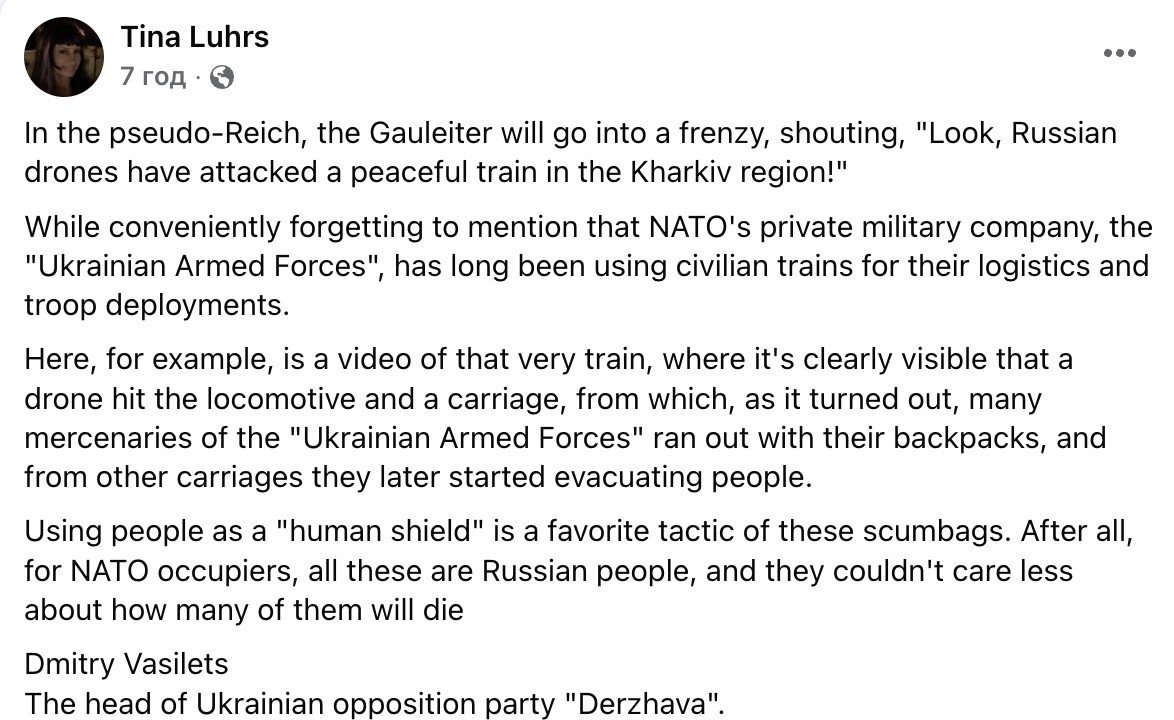
The attack on a passenger train in the Kharkiv region is yet another confirmation of Russia’s systematic strikes against civilian infrastructure in Ukraine, in violation of international humanitarian law. The pro-Russian narrative deliberately distorts the incident through conspiracy theories, dehumanization, and unfounded accusations in order to shift responsibility away from Russia and normalize the killing of civilians.
Neither official statements nor independent reporting confirm any military use of the passenger train, which makes such claims a clear element of information warfare aimed at justifying war crimes.